


To mark 30 years of Nash, we revisit six very different homes sold during this anniversary year - and one piece of woodland - that say something about the houses, places and architecture that continue to catch our eye.
We first opened our doors in 1996. Thirty years later, much about the way we live in, look at and sell houses has changed.
Our 30th year has brought changes of its own, including a new identity for Nash. It felt less like a moment to look backwards than an opportunity to reflect on what interests us now – through a selection of the homes we’ve sold during this, our anniversary year.
They range from a Victorian schoolmaster’s house to a mid-century home; from a thatched cottage with a contemporary addition to a substantial modern house overlooking open countryside. Different periods, different scales and very different prices.
What connects them is harder to define – which is probably why they stayed with us.
Aldbury
Candle Cottage
A sense of place
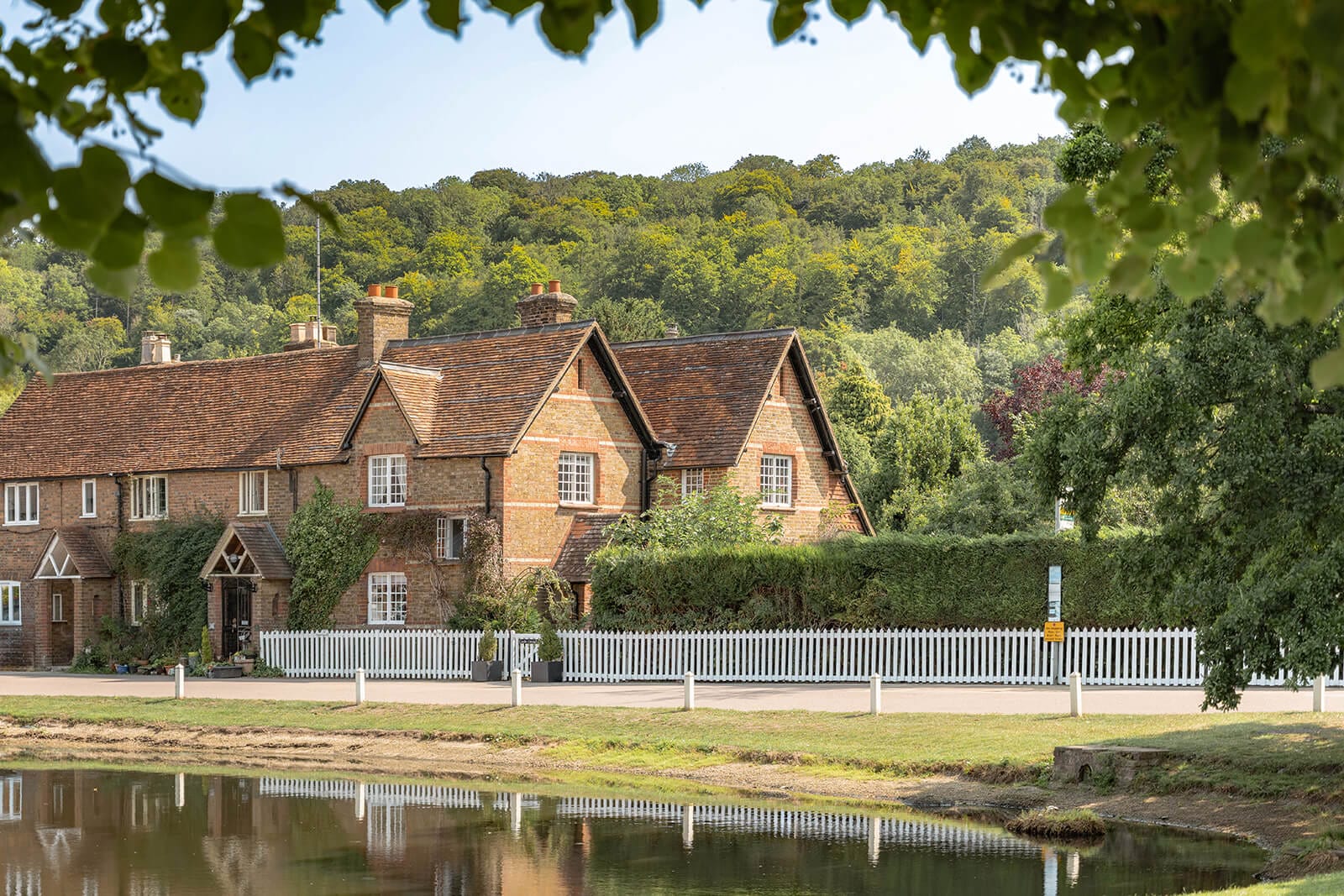
Built around 1850 as the village schoolmaster’s house and later used as the police house, Candle Cottage feels inseparable from Aldbury itself. Its patterned brickwork and steep gables face the village pond, with the wooded slopes of Ashridge rising behind.
It is a reminder that sometimes the setting isn’t simply where a house happens to be. It is part of what the house is.

Candle Cottage, Aldbury

Light, joinery and the accumulated detail of a historic village house
Felden
Felden Lane
A different kind of character
Character needn’t come with centuries attached.
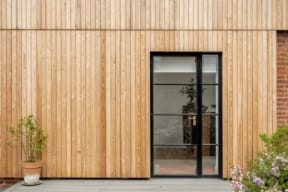
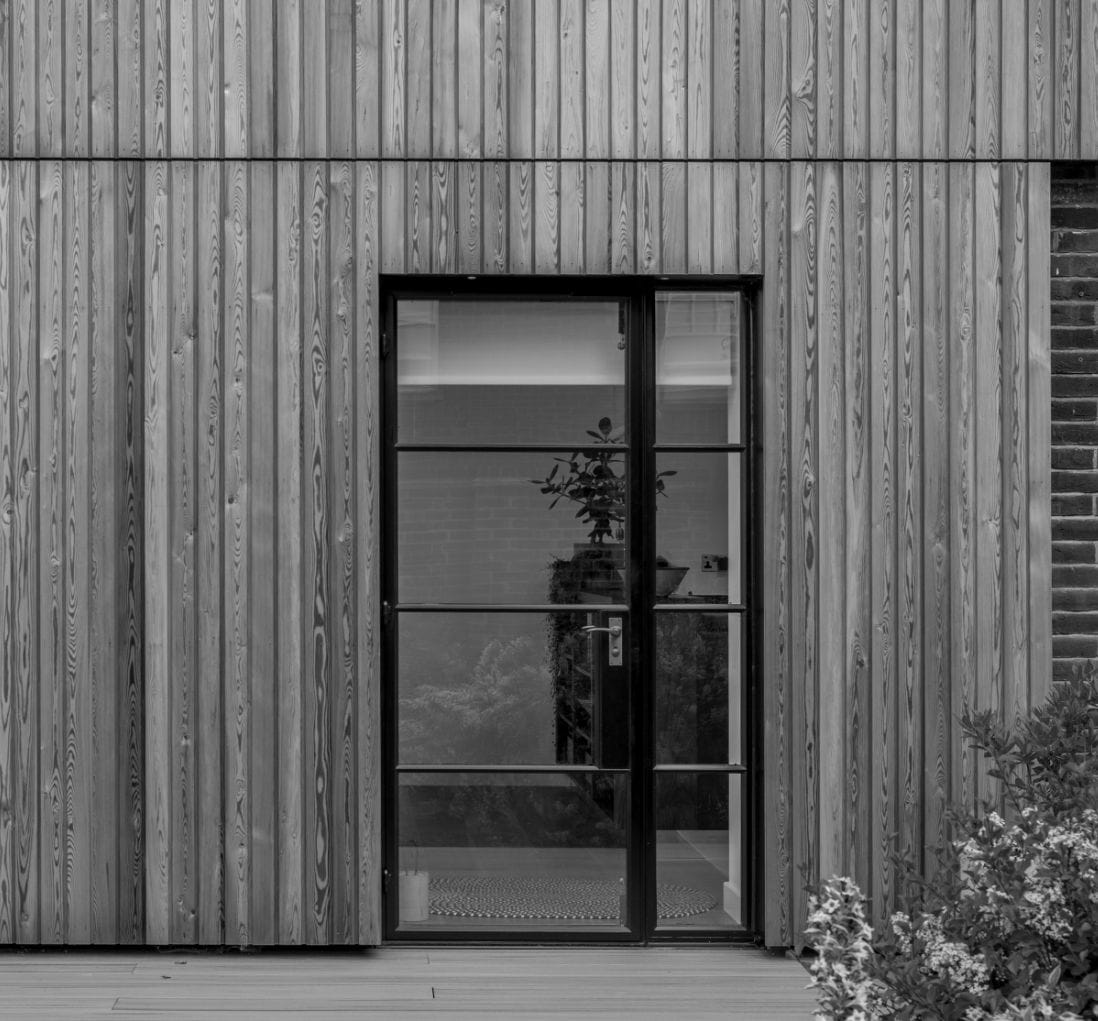
At this house in Felden Lane, it came through volume, light and material: large expanses of glazing, confident contemporary detailing and spaces designed around their relationship with the garden.
A very different architectural language from Candle Cottage, but many of the things we respond to are surprisingly similar: proportion, material, light and a strong sense of identity.


Interior and landscape conceived as part of the same composition
Great Gaddesden
St Margarets
Rooted in the landscape
Built for workers on the Ashridge Estate, this picturesque Victorian home carries the architectural signatures of its Brownlow origins: steep gables, clay peg tiles, patterned brickwork and beautiful cast-iron lattice windows.
Yet what stayed with us was as much the garden as the house. Mature planting softened the Victorian geometry until the two felt almost indivisible.


An original external wall preserved within a later addition

Original cast-iron latticework, one of the house’s Brownlow signatures
Berkhamsted
Castle Street
Layers of history
An 18th-century house behind a later façade; once a shop, now a home; and directly opposite St Peter’s Church.
Castle Street revealed its history in fragments: an old shop window framing the church, changing floor levels, exposed timbers and even a faint pencil inscription left by somebody in 1857.
Small details, perhaps. But often it is the small things that make an old house memorable.

LAYERS OF HISTORY IN CENTRAL BERKHAMSTED

The church opposite becomes part of the interior view

From the archive
If only I’d bought…
This five bedroom home in Frithsden Copse featured in one of our early advertisements in The Gazette in 1996. Thirty years later, almost everything about the way homes are marketed has changed.
Pitstone
Robin Cottage
Old meets new
At Robin Cottage, a 19th-century thatched house meets an unapologetically contemporary addition.
Rather than imitate what was already there, the extension introduces glass, openness and light. The contrast makes both halves stronger: the intimacy and texture of the old cottage on one side; contemporary space and a connection with the garden on the other.

Old fabric gives way to light and glass

The new addition sits deliberately apart from the sweep of the original thatch
Tring
Beech Walk
Modern character
Not everything worth noticing is ancient.
This mid-century house sits within a leafy, traffic-free enclave where houses look towards shared greenery rather than a road.
Its architecture is modest – broad windows, straightforward proportions and plenty of natural light – but therein lies much of its appeal. Good design doesn’t always need to announce itself.

Mid-century simplicity within a leafy, traffic-free setting in Tring

Near Tring
No house required
Woodlark Glade
Woodlark Glade was the outlier: 3.3 acres of ancient woodland near Cholesbury, without a kitchen, bedroom or front door in sight.
And perhaps that was precisely why we liked it. A reminder that sometimes a sense of place is quite enough.

Woodlark Glade: three acres, no floorplan required


What stays with us
Looking at these six homes, there isn’t an obvious Nash ‘type’. And we’re rather pleased about that.
Old or new, large or small, town or country, what interests us is less easily categorised: good proportions, honest materials, thoughtful architecture, an exceptional setting – or simply something we haven’t seen before.
Thirty years of looking at houses has probably made us more discerning about those things. But no less interested in finding them.
Lead image: Candle Cottage, Aldbury